Conservation through Competition
The 2025 Competition
is now closed but the
STERNA People's Choice Award
vote is open!
Gallery of Winners and Finalists
OVERALL WINNER
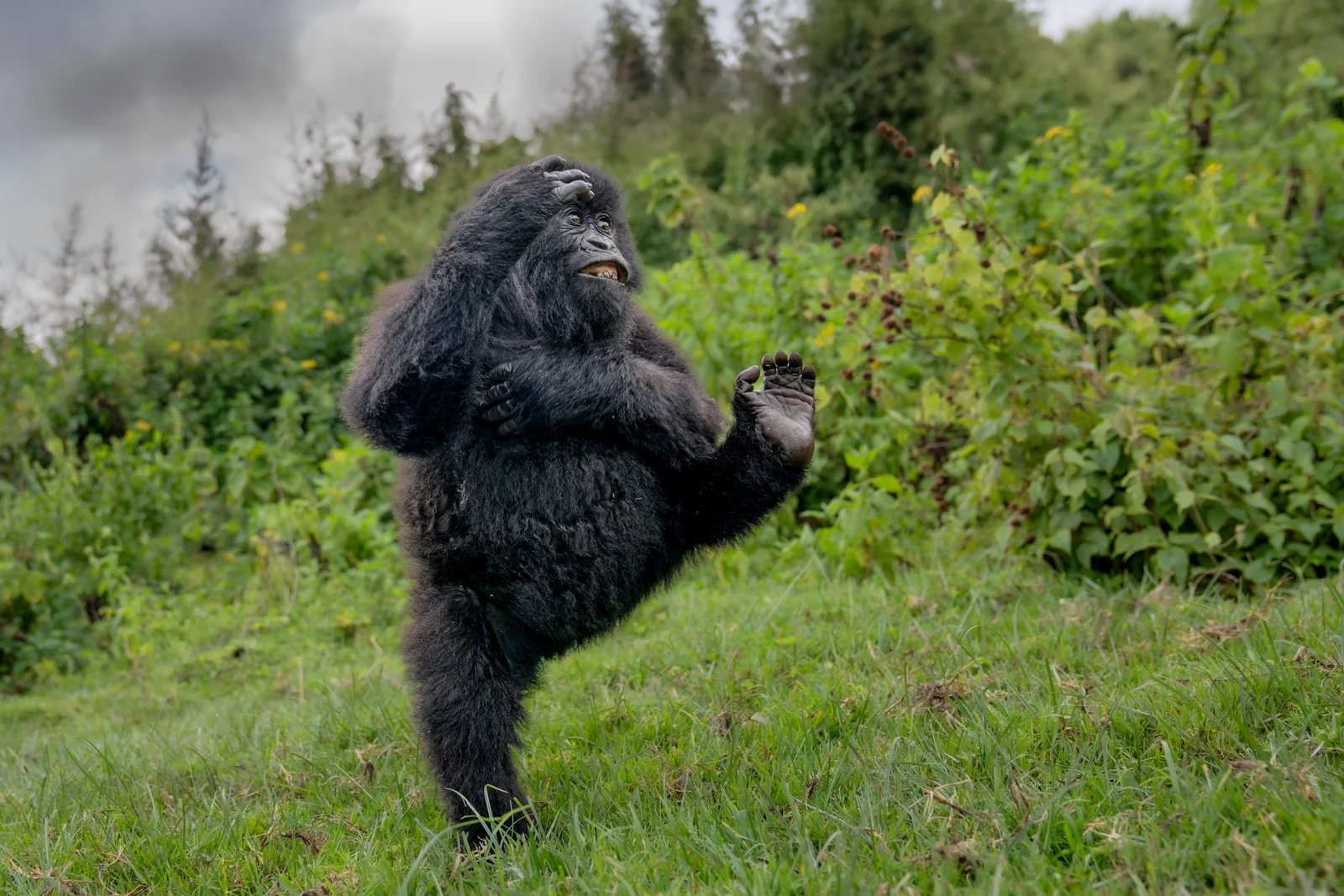
 Mark Meth Cohn (UK) with their picture “High Five”
“We spent four unforgettable days trekking through the misty Virunga Mountains in search of the gorilla families that call them home. On this particular day, we came across a large family group known as the Amahoro family, they were gathered in a forest clearing where the adults were calmly foraging while the youngsters were enthusiastically playing. One young male was especially keen to show off his acrobatic flair: pirouetting, tumbling, and high kicking. Watching his performance was pure joy, and I’m thrilled to have captured his playful spirit in this image. Doing well in any competition shows that the images you are producing are working. The Nikon Comedy Wildlife Awards are one of the major competitions of the year, easy to enter and fun but with a seriously committed underlying ethos and, after reaching the finals last year, I'm absolutely delighted to have gone one step further and win the competition this year”
CATEGORY WINNERS
 ThinkTANK Birds Award
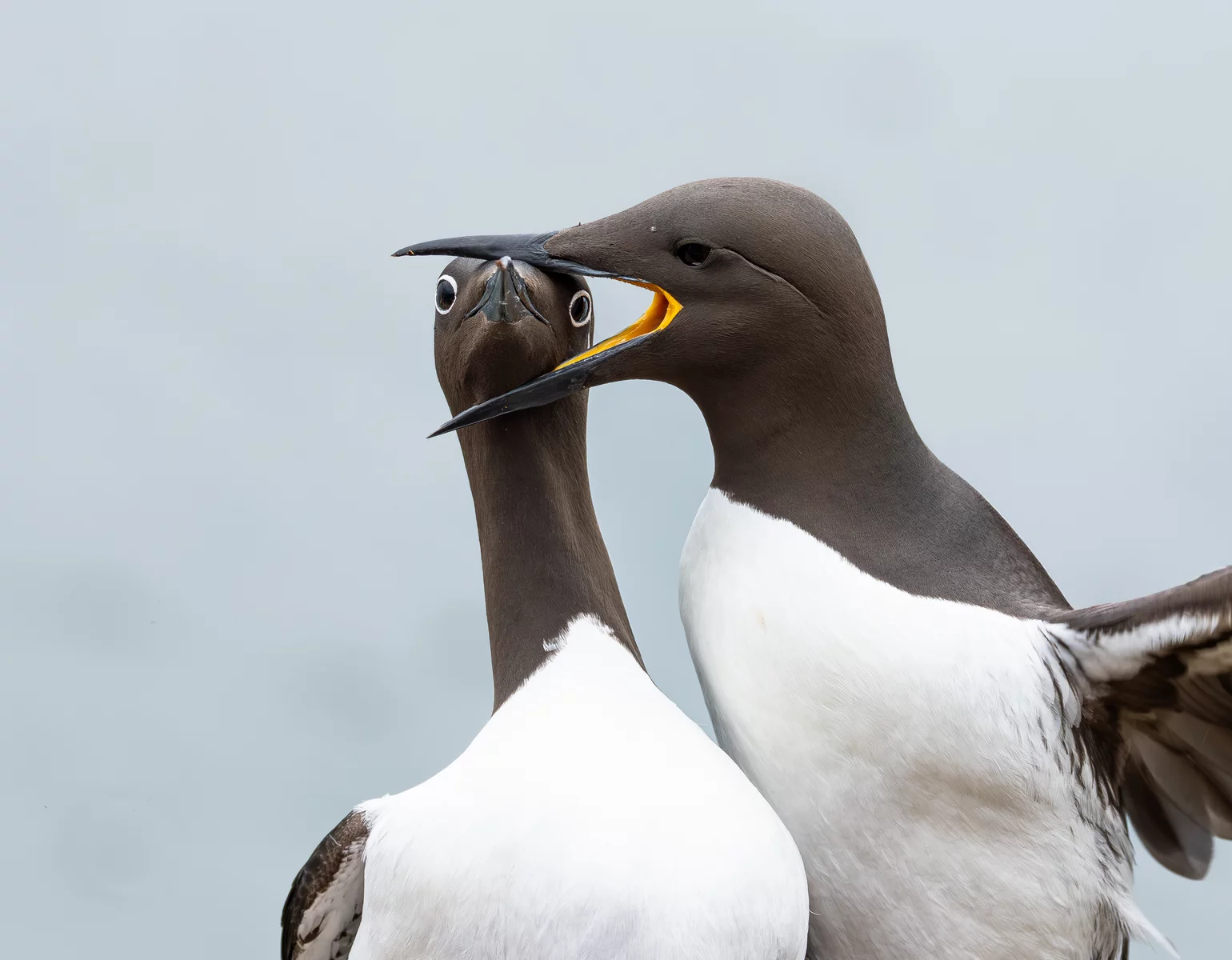
Warren Price (UK) with their picture “Headlock”
“These guillemots were nesting on a small rocky cliff ledge where space was at a premium. The nests all crammed in close together which isn’t a good recipe for being good neighbours, as guillemots are fiercely territorial. Aggression and battles are frequent over nesting space and I captured this image of this bemused looking bridled guillemot, its head firmly clamped in his/her neighbours beak. I liked the way the guillemot was looking directly into my lens, its white eye-liner eyes highlighting its predicament! Sometimes you just want to bite your neighbours head off.. literally!”
Fish and Other Aquatic Species Award
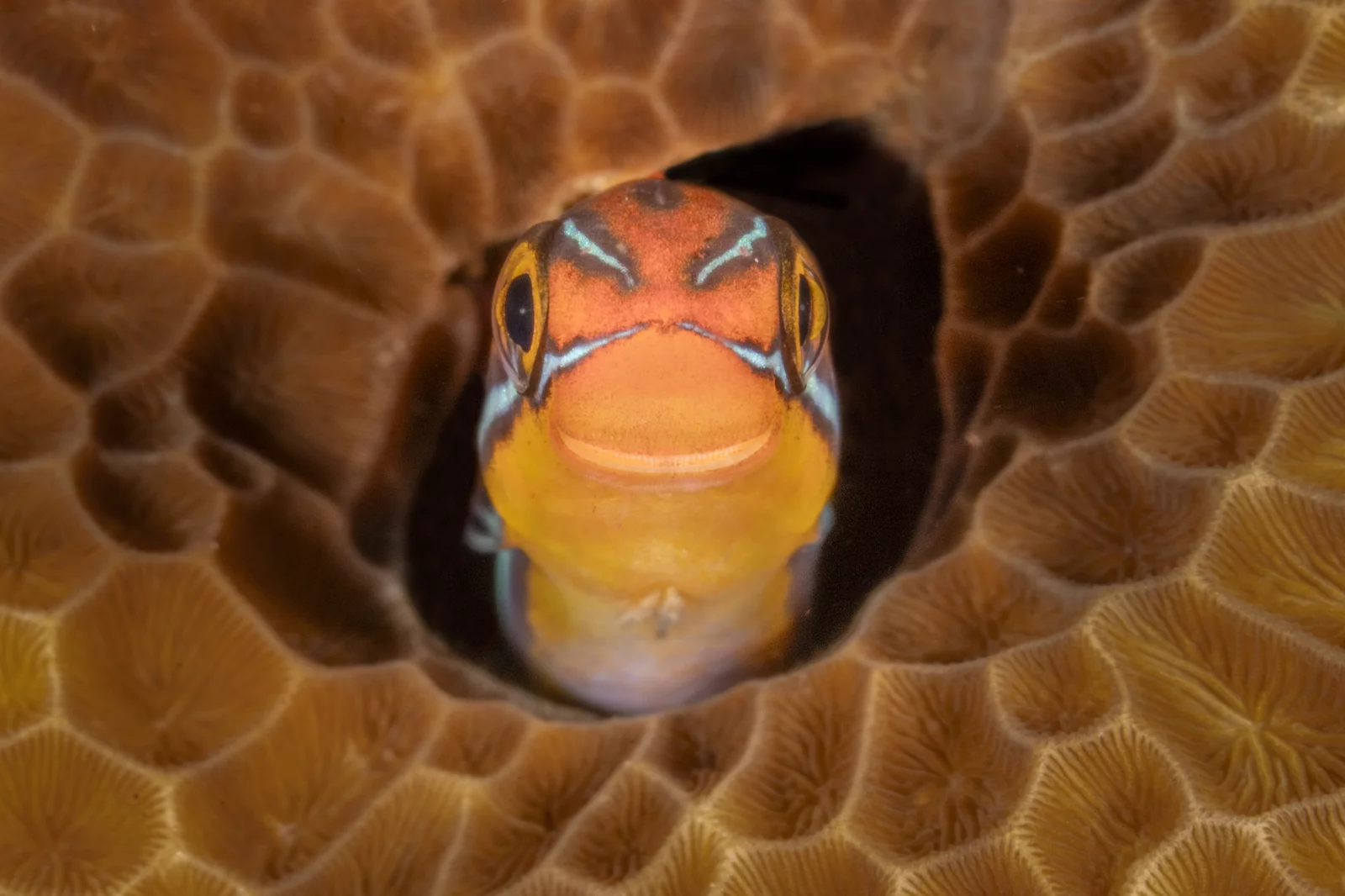
Jenny Stock (UK) with their picture “Smiley”
“Whilst on a scuba dive in the Philippines, this little fish kept popping its head out of its home, a hole in the patterned coral. I took a few photos and I loved its cheeky face smiling back at me. What an expressive looking face! This cheerful looking species, the bluestriped fangblenny is around eight centimeters and actually has a rare defence mechanism, where it can bite an attacking predator and inject venom when it is threatened. The venom causes dizziness and disorientation, weakening the predator's ability to pursue and eat the fangblenny. I took the image at 10 meters deep, in the Philippines. I used an underwater housing around my mirrorless camera, and two underwater flash guns to illuminate the subject.”
Jenny Stock (UK) with their picture “Smiley”
“Whilst on a scuba dive in the Philippines, this little fish kept popping its head out of its home, a hole in the patterned coral. I took a few photos and I loved its cheeky face smiling back at me. What an expressive looking face! This cheerful looking species, the bluestriped fangblenny is around eight centimeters and actually has a rare defence mechanism, where it can bite an attacking predator and inject venom when it is threatened. The venom causes dizziness and disorientation, weakening the predator's ability to pursue and eat the fangblenny. I took the image at 10 meters deep, in the Philippines. I used an underwater housing around my mirrorless camera, and two underwater flash guns to illuminate the subject.”
Reptiles, Amphibian and Insect Award
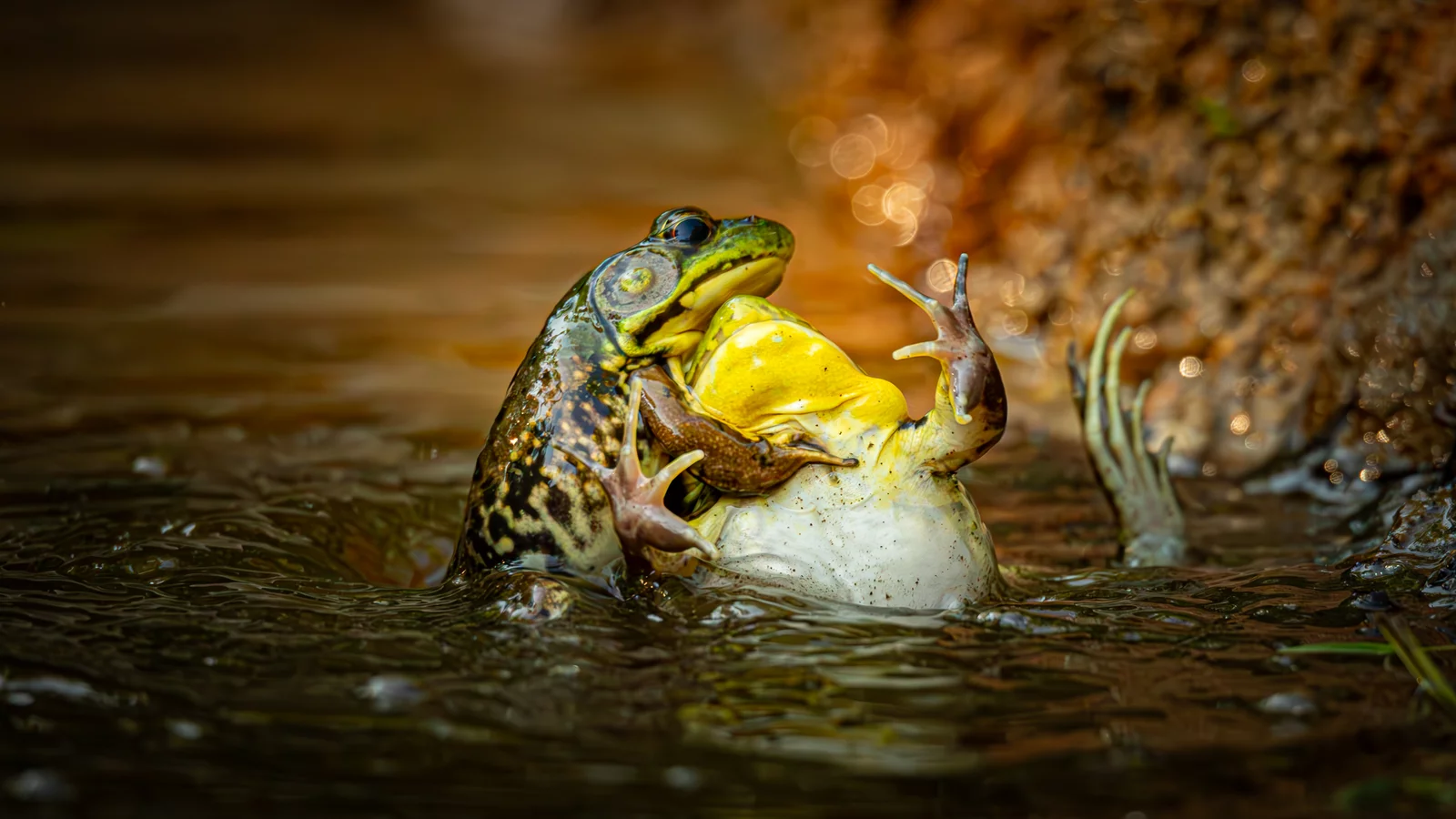
Grayson Bell (USA) with their picture “Baptism of the Unwilling Convert”
“This photo was taken in early spring of 2023. The male frogs all come out to start establishing territory in the pond. I took my camera and lay on my belly, watching them and taking shots. It wasn’t until I got back to the house and looked at the pictures that I saw this one and realized how much I liked it. I showed it to my parents and they loved it too and it became one of my favorites. We all thought it looked like one frog was trying to baptize the other! I started getting interested in photography about 3 years ago at the age of 10. My favorite subjects are chipmunks becuase they are so curious and cute. Winning these category awards has been awesome. It's great to be considered along side so many amazing entries and photographers. As a young photographer, it is affirming and inspiring to continue shooting! I really appreciated the opportunity to be a part of this!”
Grayson Bell (USA) with their picture “Baptism of the Unwilling Convert”
“This photo was taken in early spring of 2023. The male frogs all come out to start establishing territory in the pond. I took my camera and lay on my belly, watching them and taking shots. It wasn’t until I got back to the house and looked at the pictures that I saw this one and realized how much I liked it. I showed it to my parents and they loved it too and it became one of my favorites. We all thought it looked like one frog was trying to baptize the other! I started getting interested in photography about 3 years ago at the age of 10. My favorite subjects are chipmunks becuase they are so curious and cute. Winning these category awards has been awesome. It's great to be considered along side so many amazing entries and photographers. As a young photographer, it is affirming and inspiring to continue shooting! I really appreciated the opportunity to be a part of this!”
 Nikon Junior Category (Under 16) Award
Grayson Bell (USA) with their picture “Baptism of the Unwilling Convert”
“This photo was taken in early spring of 2023. The male frogs all come out to start establishing territory in the pond. I took my camera and lay on my belly, watching them and taking shots. It wasn’t until I got back to the house and looked at the pictures that I saw this one and realized how much I liked it. I showed it to my parents and they loved it too and it became one of my favorites. We all thought it looked like one frog was trying to baptize the other! I started getting interested in photography about 3 years ago at the age of 10. My favorite subjects are chipmunks becuase they are so curious and cute. Winning these category awards has been awesome. It's great to be considered along side so many amazing entries and photographers. As a young photographer, it is affirming and inspiring to continue shooting! I really appreciated the opportunity to be a part of this!”
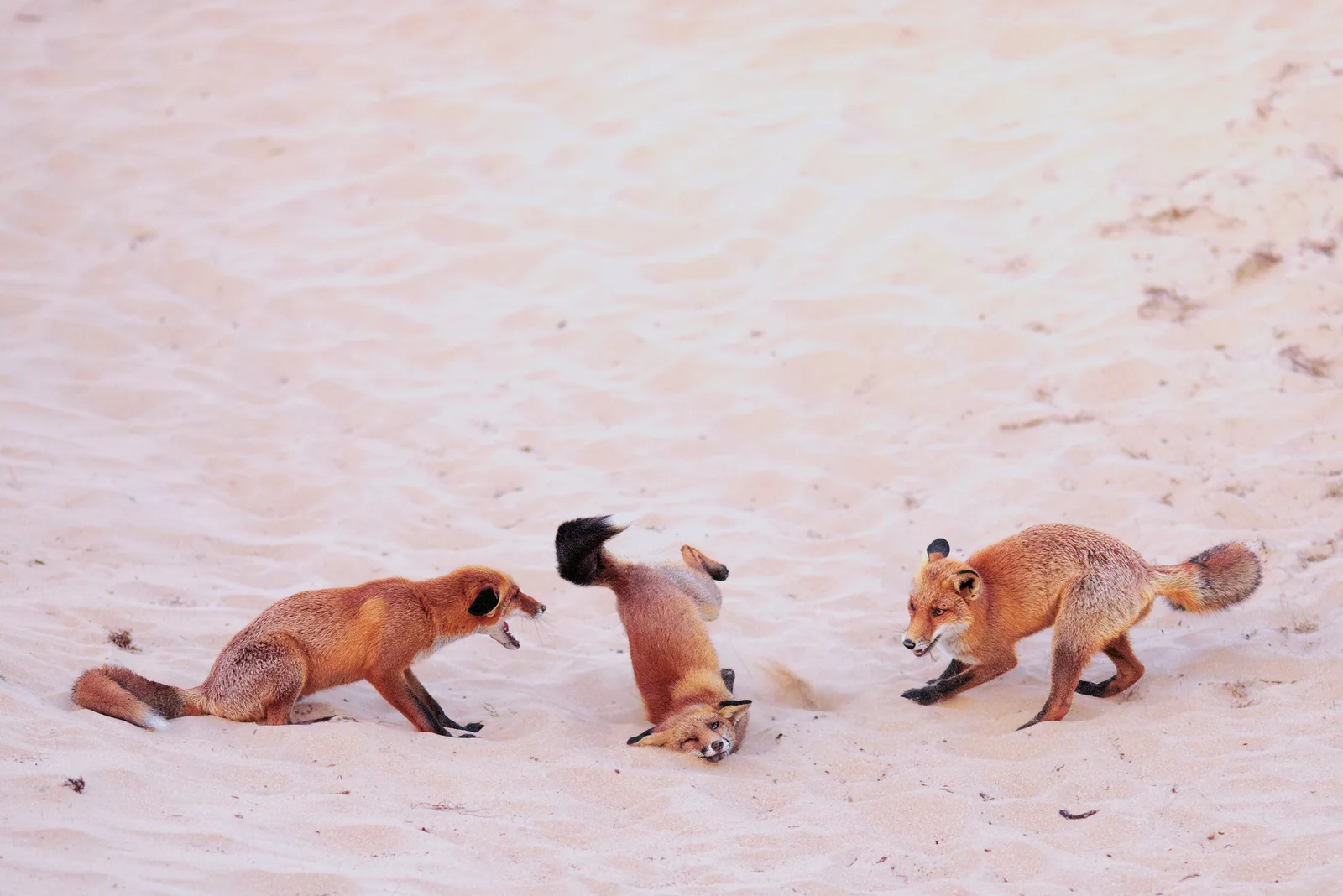
Nikon Young Photographer Category (Under 25)Paula Rustemeier (Germany) with their picture “Hit the dance floor - foxes in a breakdance battle”
“This shot was taken quite at the beginning of my wildlife photography "journey". I always enjoyed nature, but usually only photographed my dog, until I observed foxes for an essay I wrote for biology lessons in school and decided I want to try to photograph and learn even more about foxes. The photo was taken in a nature reserve. They don't get hunted there and therefore are seen during the day as well. Something I found true with all areas with low hunting pressure that I've been to so far.
I'm not the biggest fan of camouflaging. While I do use it occasionally, the best way I have found to photograph them, especially young ones, is just being present. If you put in the time, I found that the foxes usually get either curious or see you as something natural, not dangerous. Either way, they come close eventually. I had several foxes nipping at my shoes already like this, as well as foxes catching mice just a couple meters away from me!
This was my tactic with these foxes too. Like this, I could follow and document them for several months while they grew up. Their den lied in a sandy valley. Sometimes I found one or two sleeping in that area during the day, but when dawn set, they met up at this spot, got really active and often played a lot together, just like in the image.
The time with them taught me a lot about their social behavior. I saw them fight, hunt, sleep, groom - and of course play, which is always my favorite to watch! You really have to giggle a lot watching foxes play with their quirky personalities.
Since then, I had been photographing and following fox cubs every spring/summer and had much more amazing encounters with foxes and also other wildlife. :)”
 Amazing Internet Portfolio Award
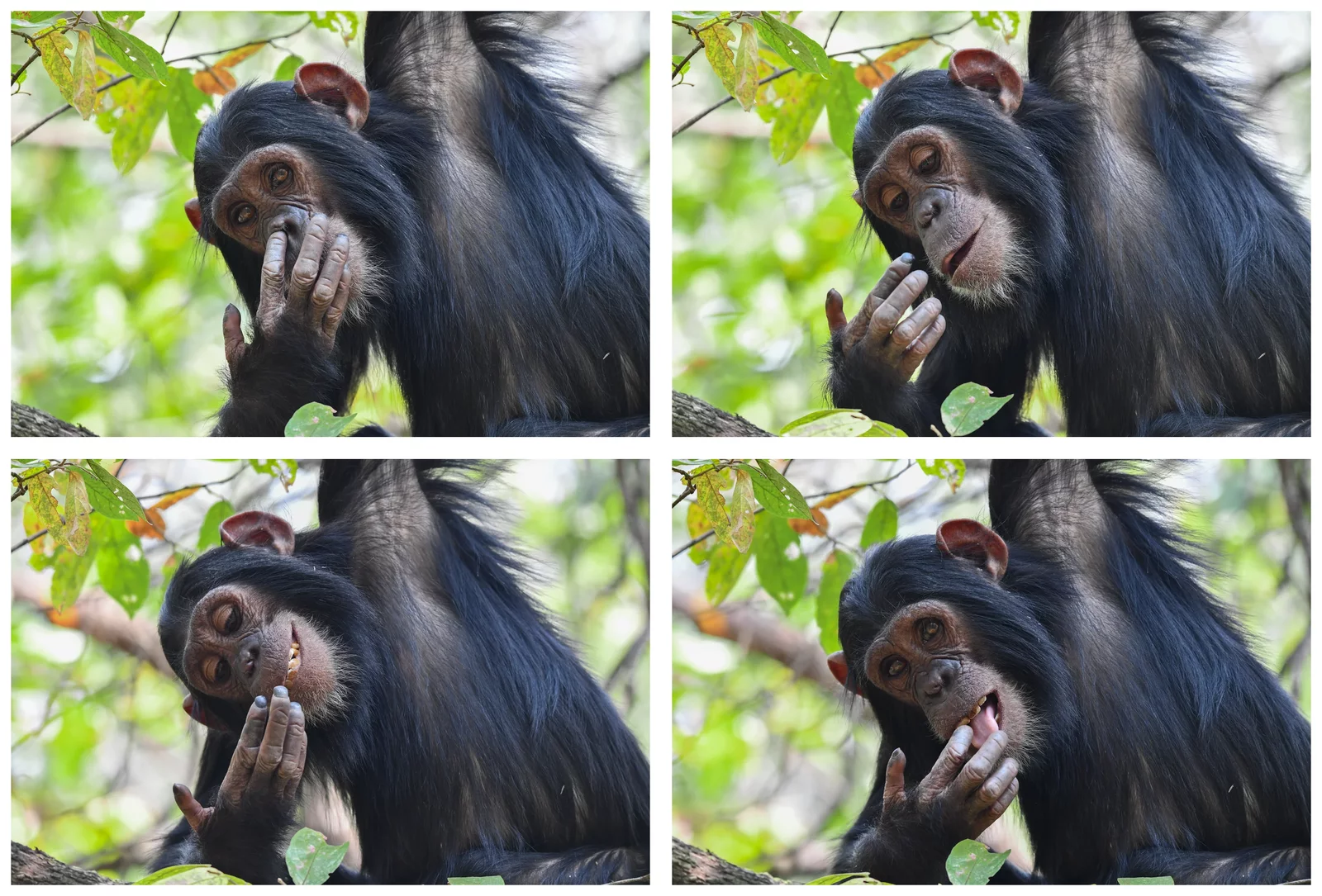
Maggie Hoffman (USA) with their picture “Digging for Gold”
“A young female chimpanzee picking her nose and eating it!”
Video Category Winner
Tatjana Epp (Germany) with their video “Surfing heron”
“At first we spotted the heron and didn't notice that it was actually standing on the back of the hippo. A perfect shelter for him, because there were so many crocodiles around. So actually a really smart move! When the hippo started moving , the heron looked a bit irritated. He almost lost his balance. But the way how fast he got his balance back and how he really seemed to enjoy the ride was a once in a lifetime scene to witness! The video ends with the hippo turning its head around. It wanted to get rid of the heron. But it stayed there and the hippo gave up in the end. When we left the place, the heron was still relaxing on the back. The video was filmed in the Kruger National Park in South Africa in March 2025.”
Tatjana Epp (Germany) with their video “Surfing heron”
“At first we spotted the heron and didn't notice that it was actually standing on the back of the hippo. A perfect shelter for him, because there were so many crocodiles around. So actually a really smart move! When the hippo started moving , the heron looked a bit irritated. He almost lost his balance. But the way how fast he got his balance back and how he really seemed to enjoy the ride was a once in a lifetime scene to witness! The video ends with the hippo turning its head around. It wanted to get rid of the heron. But it stayed there and the hippo gave up in the end. When we left the place, the heron was still relaxing on the back. The video was filmed in the Kruger National Park in South Africa in March 2025.”
HIGHLY COMMENDED WINNERS
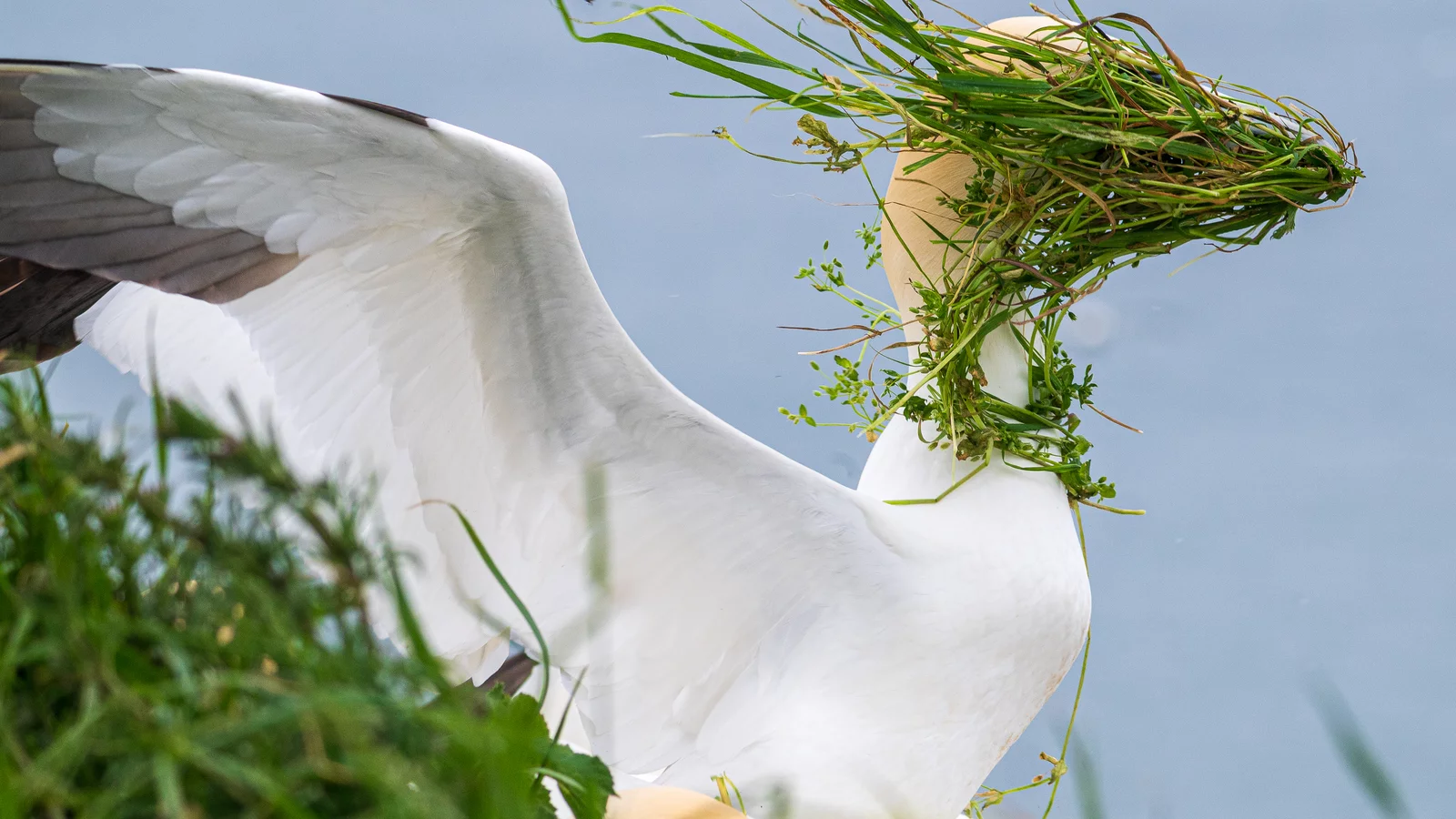
Alison Tuck (UK) with their picture “Now which direction is my nest”
“Taken on a Nikon School UK Photo Trip to Bempton Cliffs in Yorkshire, England in July 2023 using a Nikon Z6II with the 100-400mm f4.5-5.6 with 2x teleconverter at 460mm, 1/1000s, ISO 360 and f10.4. Bempton Cliffs are well known as a breeding site for Gannets, Razorbills and Puffins and the Nikon School visit was to photograph these birds. The cliffs are on the East coast of England and usually have an offshore wind, but unusually there was a strong onshore breeze making the gannets' take offs and landings more dynamic than usual as the wind hit the cliffs and was pushed straight up into the air. Whilst collecting nesting grass from one spot on the top of the cliffs the wind was blowing the grass across their eyes making take off and direction finding even more challenging, hence ’Now which direction is my nest?’ as the title I picked for my photograph.”
“Taken on a Nikon School UK Photo Trip to Bempton Cliffs in Yorkshire, England in July 2023 using a Nikon Z6II with the 100-400mm f4.5-5.6 with 2x teleconverter at 460mm, 1/1000s, ISO 360 and f10.4. Bempton Cliffs are well known as a breeding site for Gannets, Razorbills and Puffins and the Nikon School visit was to photograph these birds. The cliffs are on the East coast of England and usually have an offshore wind, but unusually there was a strong onshore breeze making the gannets' take offs and landings more dynamic than usual as the wind hit the cliffs and was pushed straight up into the air. Whilst collecting nesting grass from one spot on the top of the cliffs the wind was blowing the grass across their eyes making take off and direction finding even more challenging, hence ’Now which direction is my nest?’ as the title I picked for my photograph.”
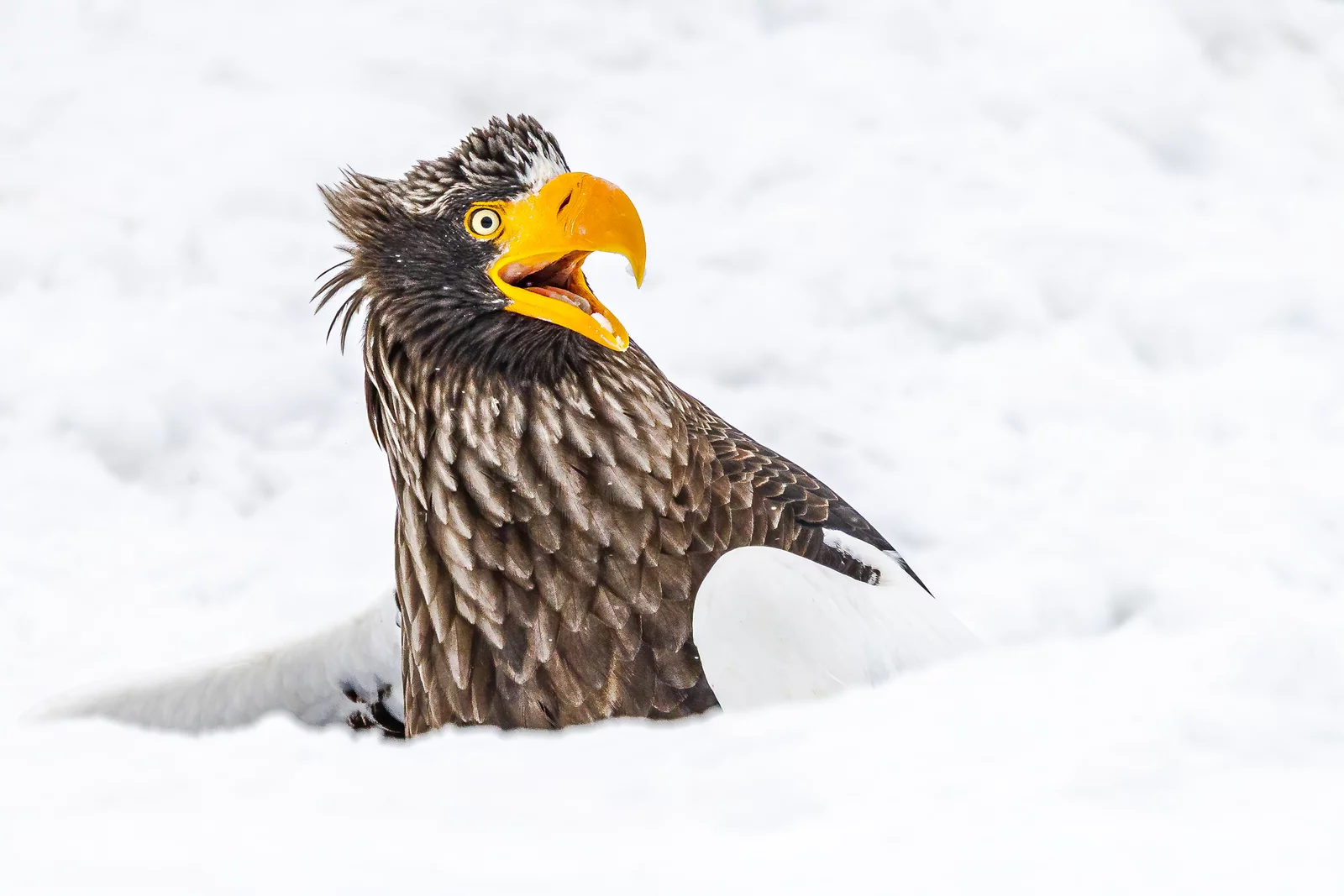
Annette Kirby (Australia) with their picture “Go away”
“"In February 2025 I flew from my home in South Australia where the summer temperatures ranged from mid 20’s to mid-40 degrees Celsius to the island of Hokkadia in Japan, where temperatures were minus degrees, the coldest day being minus 18 Celsius.
I experienced a winter wonderland so vastly different from my arid hot home environment. A highlight was visiting Rausa on the Shirenhoka Peninsula and Nemuro Straits, where the Steller’s Sea Eagle gather in the winter to fish from drift ice. With fewer than 5000 left in the world they are listed as vulnerable on the International Union for Conservation of Nature’s Red List of threatened species. The female can weigh up to 9.5kg, making it the heaviest eagle in the world. Their wingspan, up to 2.5 metres is of the largest of any living eagle. In Japan they are protected and classified as a national treasure.
They indeed are a national treasure and so entertaining to watch and photograph as they fight to protect their catch. A favourite place for them to perch is on the sea wall protecting the fishing fleet at Rausa. They wait watching the boats come into the harbour hoping for a free feed of fish. I captured this photo of the Steller’s Sea Eagle as it sat in a deep hole in the snow. It had a fish and had flown on the sea wall and found a hole in the deep fresh snow. Other birds were flying above and as they came closer, I captured the look it gave them. There was no way it was parting with its catch. As it had made its intentions clear to other competitors, it stayed alert but managed to enjoy its catch.”
“"In February 2025 I flew from my home in South Australia where the summer temperatures ranged from mid 20’s to mid-40 degrees Celsius to the island of Hokkadia in Japan, where temperatures were minus degrees, the coldest day being minus 18 Celsius.
I experienced a winter wonderland so vastly different from my arid hot home environment. A highlight was visiting Rausa on the Shirenhoka Peninsula and Nemuro Straits, where the Steller’s Sea Eagle gather in the winter to fish from drift ice. With fewer than 5000 left in the world they are listed as vulnerable on the International Union for Conservation of Nature’s Red List of threatened species. The female can weigh up to 9.5kg, making it the heaviest eagle in the world. Their wingspan, up to 2.5 metres is of the largest of any living eagle. In Japan they are protected and classified as a national treasure.
They indeed are a national treasure and so entertaining to watch and photograph as they fight to protect their catch. A favourite place for them to perch is on the sea wall protecting the fishing fleet at Rausa. They wait watching the boats come into the harbour hoping for a free feed of fish. I captured this photo of the Steller’s Sea Eagle as it sat in a deep hole in the snow. It had a fish and had flown on the sea wall and found a hole in the deep fresh snow. Other birds were flying above and as they came closer, I captured the look it gave them. There was no way it was parting with its catch. As it had made its intentions clear to other competitors, it stayed alert but managed to enjoy its catch.”
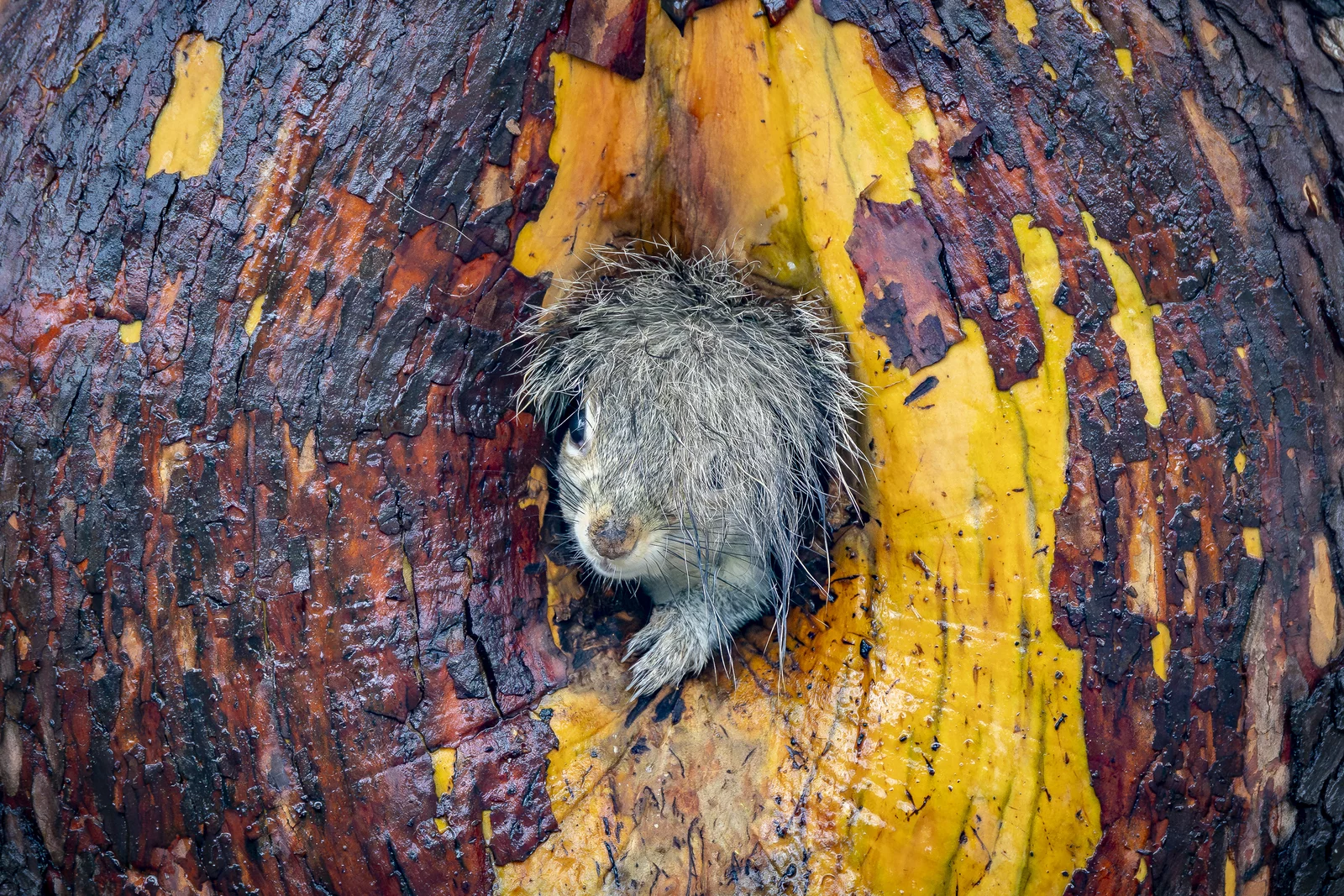
Christy Grinton (Canada) with their picture “Bad hair day”
“For my image "Bad Hair Day" I was in a local park in downtown Victoria when I saw a grey blur run by. When I looked closer I saw a mother grey squirrel was relocating her babies to a new nest. The grass was dewy that morning so she was getting a wet tail as she ran through the grass. As she entered her new nest her tail was sticking out so when she turned around to leave, for a short second her head was covered by her wet tail. When I saw her it made me smile thinking I know that moment where you have just washed your hair and the doorbell goes! I also loved the textures and colours of the bark of the arbutus tree surrounding her and her "bad hair"”
“For my image "Bad Hair Day" I was in a local park in downtown Victoria when I saw a grey blur run by. When I looked closer I saw a mother grey squirrel was relocating her babies to a new nest. The grass was dewy that morning so she was getting a wet tail as she ran through the grass. As she entered her new nest her tail was sticking out so when she turned around to leave, for a short second her head was covered by her wet tail. When I saw her it made me smile thinking I know that moment where you have just washed your hair and the doorbell goes! I also loved the textures and colours of the bark of the arbutus tree surrounding her and her "bad hair"”
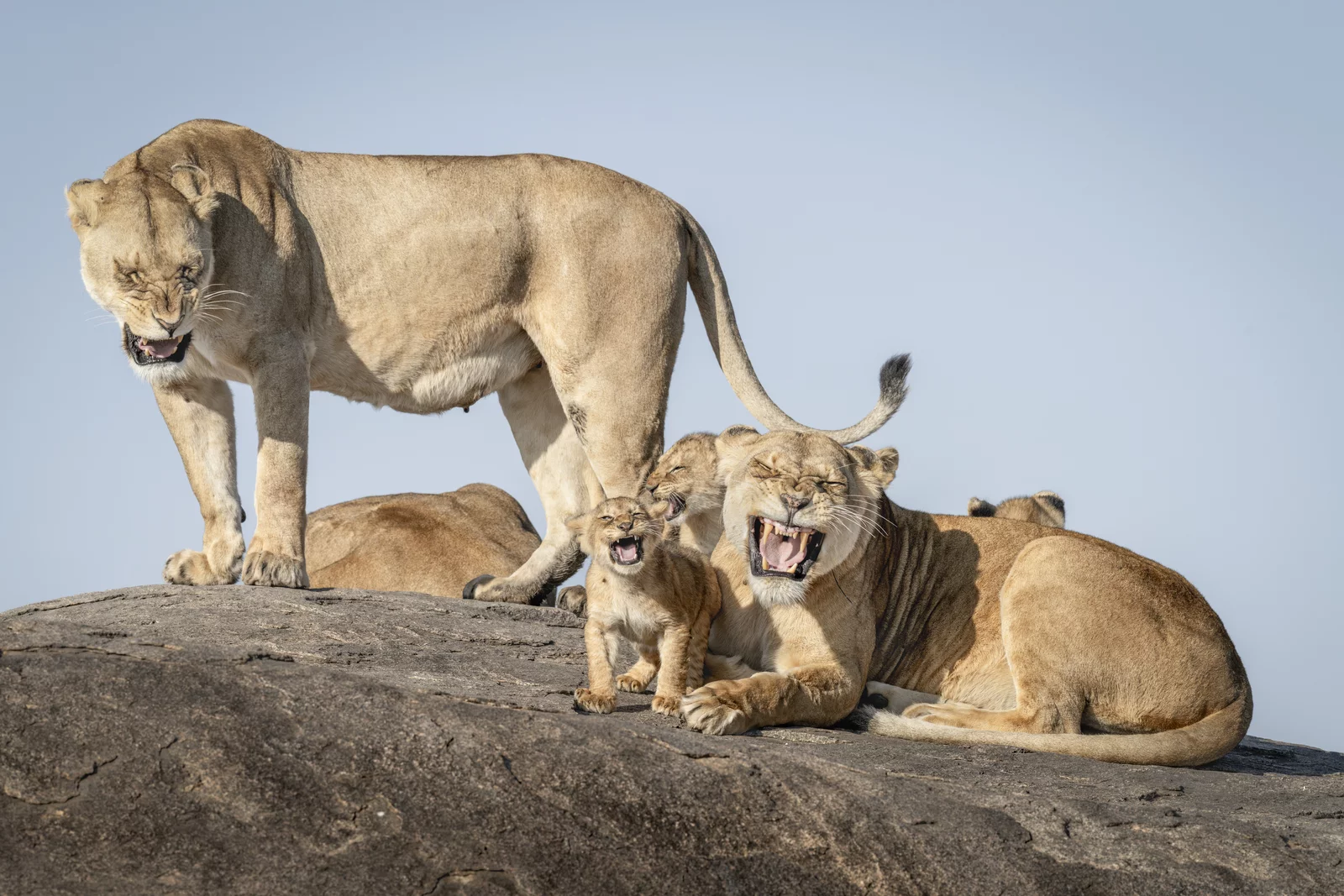
Bret Saalwaechter (USA) with their picture “I just cant wait to be king”
“I’ve always been fascinated by the complex social lives of lions, and there’s no better place to observe them than Tanzania’s Serengeti National Park. I captured this image in September 2024, during the dry season, when dwindling food and water can heighten family tensions. One morning near the Semetu Kopjes, we found a pride locked in a lively standoff - hungry cubs clamoring for milk, mothers giving in briefly before retreating in exhaustion. Life in the dry season is no picnic—lions are anxiously waiting for the Great Migration and the feast it promises—but it makes for some incredible wildlife behavior and these cubs were the stars of the show. For over an hour, they followed their mother around a famous Serengeti kopje—those iconic rocky outcrops that dot the landscape—alternating between trying to suckle and play. Each time the mother, already in a foul mood from the sweltering heat, would give a quick roar of disapproval and escape the circus. But the cubs, like any persistent little ones, would chase her down, nipping at her and yelping for more attention. This back-and-forth drama played out again and again Roaring in protest, the lionesses leapt onto the kopje for a moment’s peace, only to be followed by their relentless offspring. As the chaos peaked, the entire pride erupted in a chorus of roars and wails, giving me the perfect instant to press the shutter.”
“I’ve always been fascinated by the complex social lives of lions, and there’s no better place to observe them than Tanzania’s Serengeti National Park. I captured this image in September 2024, during the dry season, when dwindling food and water can heighten family tensions. One morning near the Semetu Kopjes, we found a pride locked in a lively standoff - hungry cubs clamoring for milk, mothers giving in briefly before retreating in exhaustion. Life in the dry season is no picnic—lions are anxiously waiting for the Great Migration and the feast it promises—but it makes for some incredible wildlife behavior and these cubs were the stars of the show. For over an hour, they followed their mother around a famous Serengeti kopje—those iconic rocky outcrops that dot the landscape—alternating between trying to suckle and play. Each time the mother, already in a foul mood from the sweltering heat, would give a quick roar of disapproval and escape the circus. But the cubs, like any persistent little ones, would chase her down, nipping at her and yelping for more attention. This back-and-forth drama played out again and again Roaring in protest, the lionesses leapt onto the kopje for a moment’s peace, only to be followed by their relentless offspring. As the chaos peaked, the entire pride erupted in a chorus of roars and wails, giving me the perfect instant to press the shutter.”
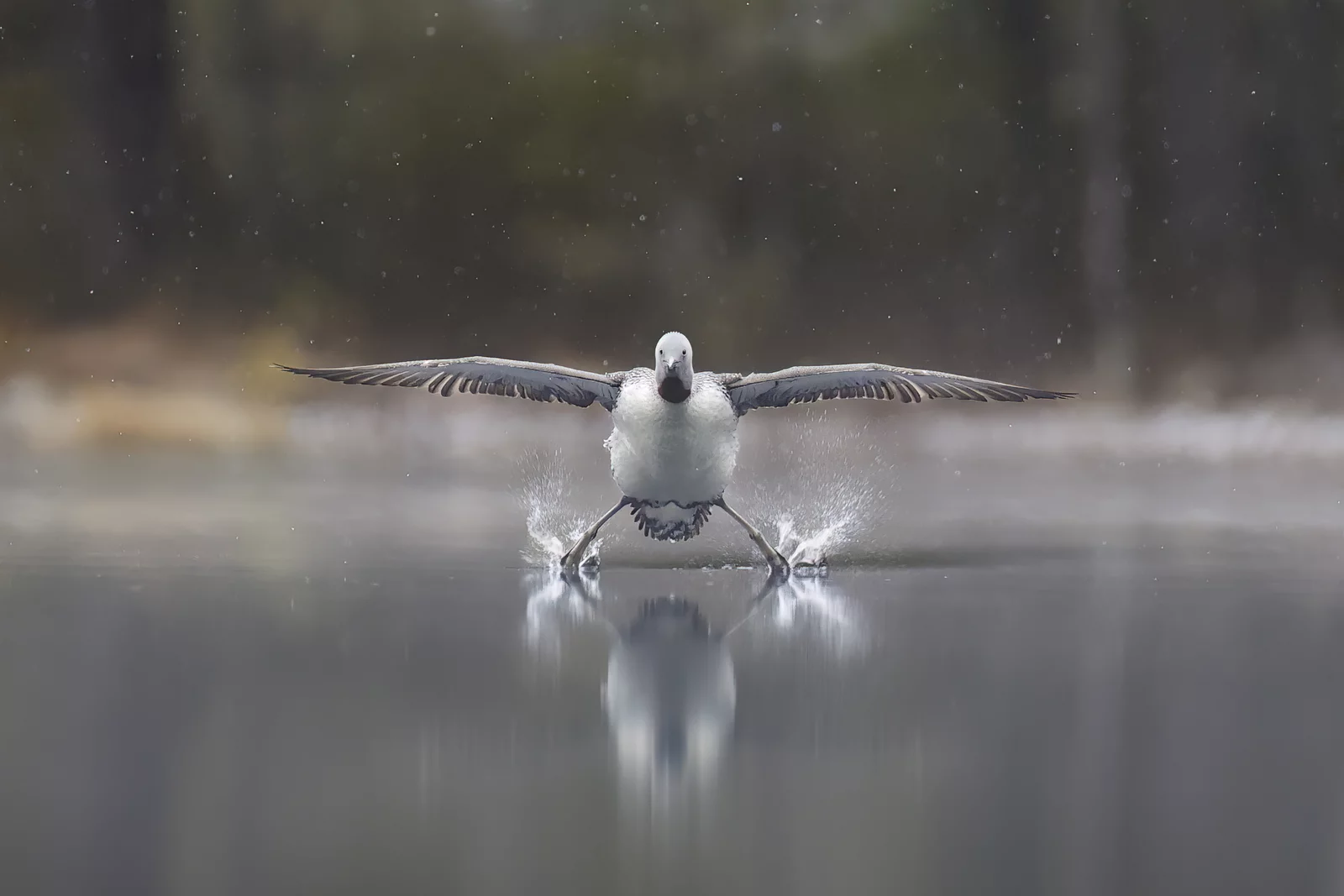
Erkko Badermann (Finland) with their picture “Landing gear down”
“This photograph came about as a hard-won victory of patience. I have been photographing Red-throated Loons for several years. I lie on the edge of a bond under a camouflage net and photograph their spring courtship displays from my hide. The ground is wet and cold. That morning, an unseasonable early-spring snowfall caught me by surprise, making photography almost impossible. Lying there on the cold shore of the bond, I found myself thinking there was no sense in being there. I was already about to leave. However, I decided to stay, and the snowfall faded into quiet, beautiful drifting flakes, and a thin mist rose from the surface of the lake.
Another Red-throated Loon on the lake had turned white from the snowfall. From its behaviour I noticed that its mate was arriving at the lake, and I managed to get it in my camera’s focus against the grey sky. I lost it for a moment, but caught it again just before it landed on the water.
The Red-throated Loon is quite a “poor” flier, and its landing is usually very wobbly: it seeks balance with its legs stretched backwards and then belly-lands to glide. I like to say they use the water as their runway. This time the bird came straight towards me and was so steady you might imagine it had taken flying lessons.
The photograph has travelled with me in my exhibitions, and it always elicits a chuckle from viewers. There is something funny about it. I thought it would be perfect for this competition to bring joy to its viewers.”
“This photograph came about as a hard-won victory of patience. I have been photographing Red-throated Loons for several years. I lie on the edge of a bond under a camouflage net and photograph their spring courtship displays from my hide. The ground is wet and cold. That morning, an unseasonable early-spring snowfall caught me by surprise, making photography almost impossible. Lying there on the cold shore of the bond, I found myself thinking there was no sense in being there. I was already about to leave. However, I decided to stay, and the snowfall faded into quiet, beautiful drifting flakes, and a thin mist rose from the surface of the lake.
Another Red-throated Loon on the lake had turned white from the snowfall. From its behaviour I noticed that its mate was arriving at the lake, and I managed to get it in my camera’s focus against the grey sky. I lost it for a moment, but caught it again just before it landed on the water.
The Red-throated Loon is quite a “poor” flier, and its landing is usually very wobbly: it seeks balance with its legs stretched backwards and then belly-lands to glide. I like to say they use the water as their runway. This time the bird came straight towards me and was so steady you might imagine it had taken flying lessons.
The photograph has travelled with me in my exhibitions, and it always elicits a chuckle from viewers. There is something funny about it. I thought it would be perfect for this competition to bring joy to its viewers.”
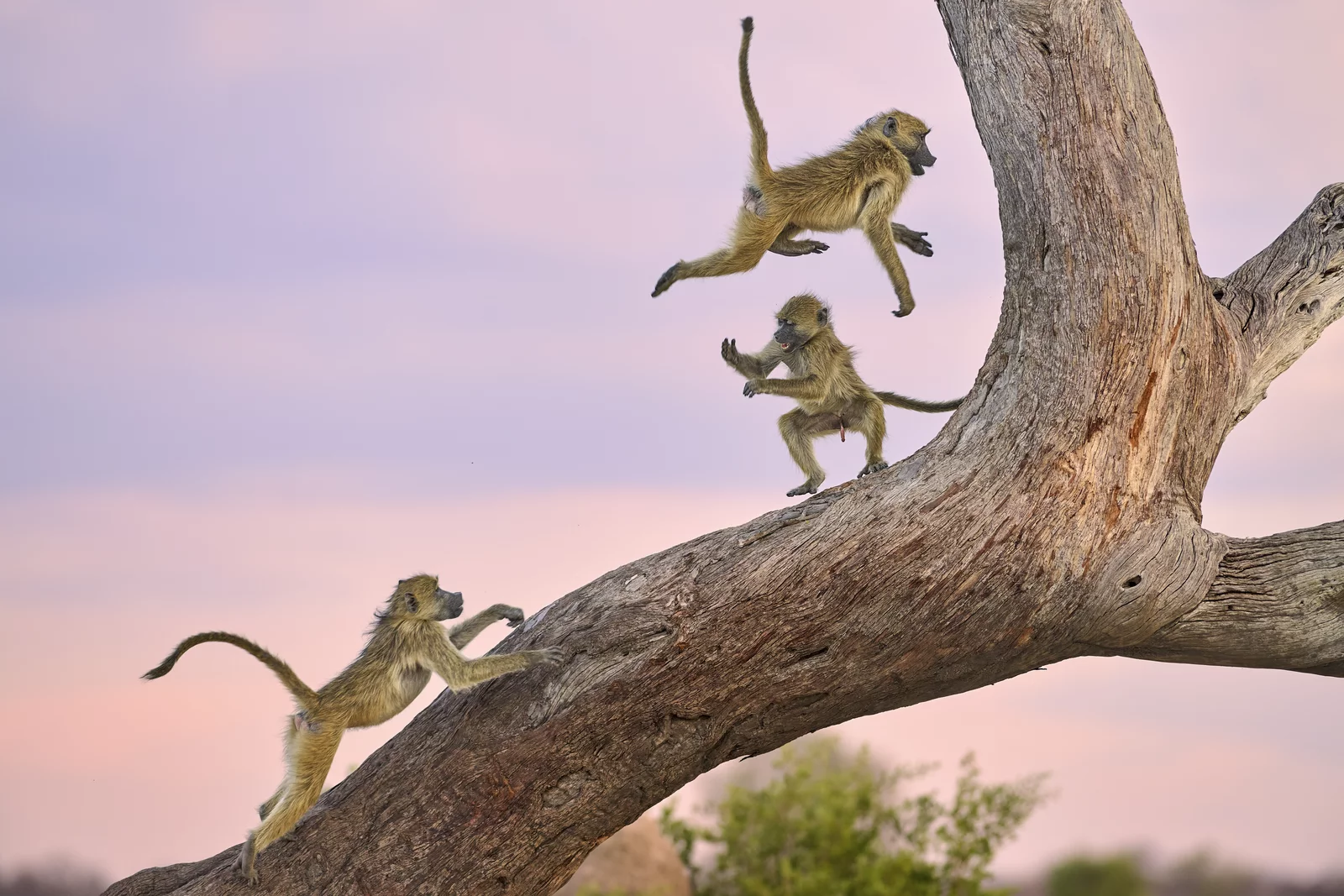
Kalin Botev (Bulgaria) with their picture “Monkey Circus”
“My wife, Nellie and I were on our honeymoon in the Hwange National Park in Zimbabwe, known for its vast landscapes and its huge elephant herds. We were there right in the beginning of the rainy season and witnessed how nature wakes up after the first rains in many months. Although animals had dispersed and were harder to see, we could feel the excitement brought by the rains everywhere. One evening on our way to the camp we bumped into a troop of baboons playing in a huge tree. One of the baboons was sitting on a big brunch and the others were running up and down the tree in circles. Every time they passed by the sitting baboon it was trying to catch them in a funny way. This play continued for more than 15 minutes and the baboons seemed to really enjoy it.”
“My wife, Nellie and I were on our honeymoon in the Hwange National Park in Zimbabwe, known for its vast landscapes and its huge elephant herds. We were there right in the beginning of the rainy season and witnessed how nature wakes up after the first rains in many months. Although animals had dispersed and were harder to see, we could feel the excitement brought by the rains everywhere. One evening on our way to the camp we bumped into a troop of baboons playing in a huge tree. One of the baboons was sitting on a big brunch and the others were running up and down the tree in circles. Every time they passed by the sitting baboon it was trying to catch them in a funny way. This play continued for more than 15 minutes and the baboons seemed to really enjoy it.”
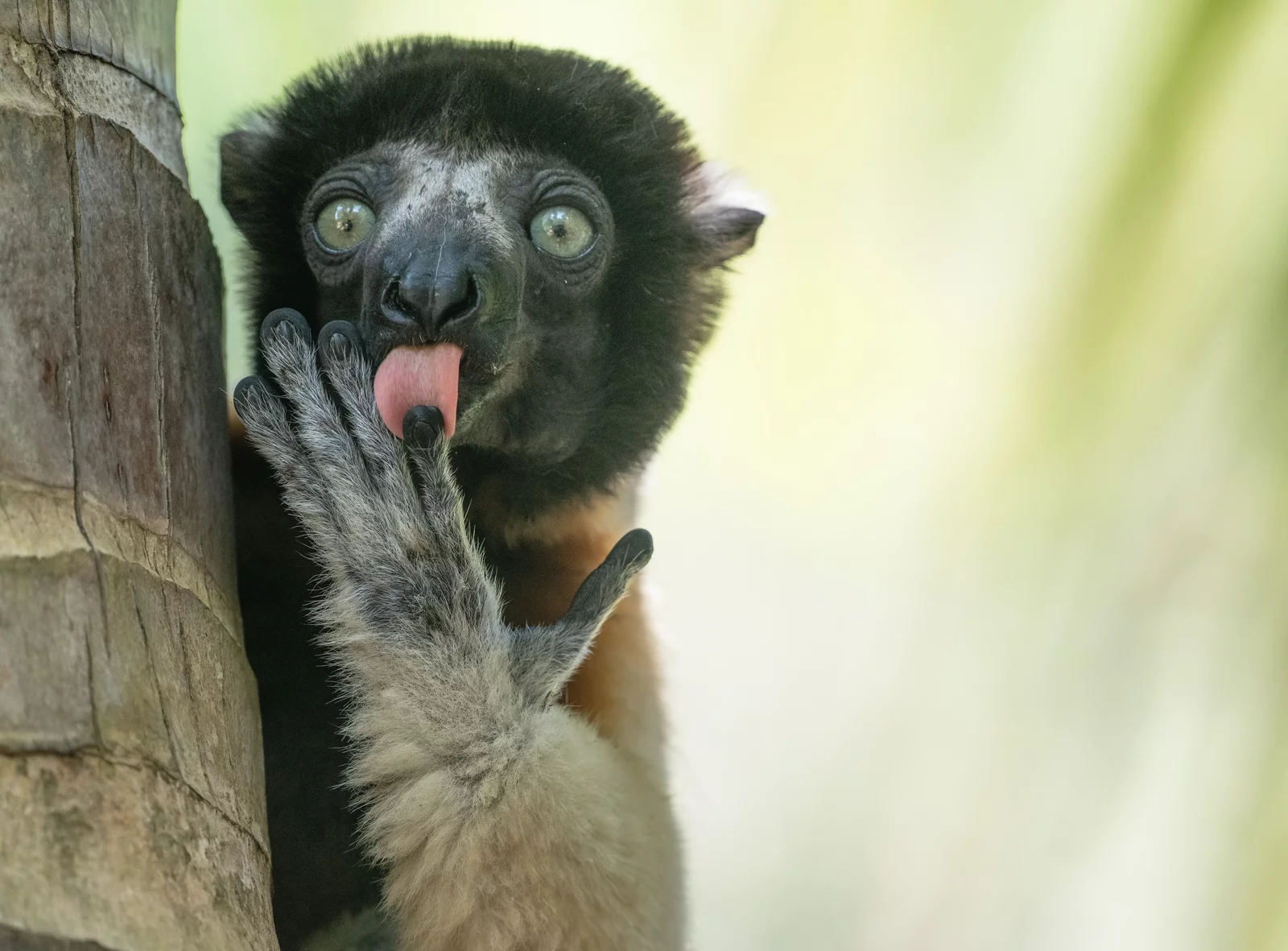
Liliana Luca (Italy) with their picture “Fonzies advertising”
“This moment happened after the tourists had left Nosy Komba (Madagascar). I stopped, letting the silence fall around me, and turned my attention to a group of crowned sifakas (Propithecus deckenii). It was then that he appeared, staring at me with wide, curious eyes, as if questioning my presence... or perhaps my clothing choices.
Then, with the grace of a stage actor and the timing of a comedian, he raised his hand, licked it thoughtfully, and then paused mid-gesture, as if he knew exactly what he was doing.
The photo immediately reminded me of that old snack commercial:
"If you don't lick your fingers... you're only half enjoying it!"
Ultimately, this is why I love nature photography so much: sometimes nature's sense of humor is better than our own; you just have to be ready to catch it..”
“This moment happened after the tourists had left Nosy Komba (Madagascar). I stopped, letting the silence fall around me, and turned my attention to a group of crowned sifakas (Propithecus deckenii). It was then that he appeared, staring at me with wide, curious eyes, as if questioning my presence... or perhaps my clothing choices.
Then, with the grace of a stage actor and the timing of a comedian, he raised his hand, licked it thoughtfully, and then paused mid-gesture, as if he knew exactly what he was doing.
The photo immediately reminded me of that old snack commercial:
"If you don't lick your fingers... you're only half enjoying it!"
Ultimately, this is why I love nature photography so much: sometimes nature's sense of humor is better than our own; you just have to be ready to catch it..”
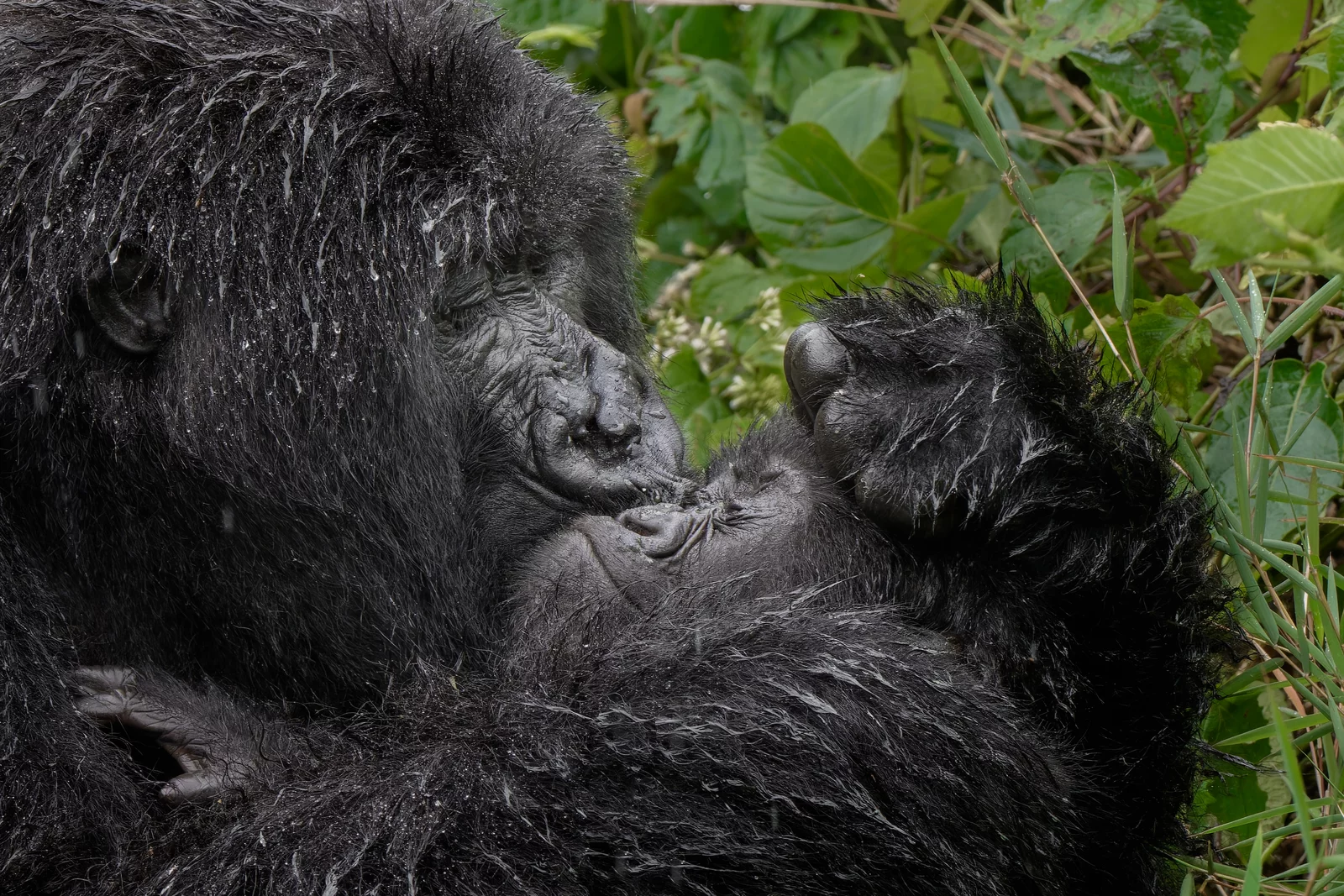
Mark Meth Cohn (UK) with their picture “Aaaaawa - mum”
“This photograph was taken during a trip to Rwanda earlier this year, where we spent four unforgettable days trekking through the misty Virunga Mountains in search of the gorilla families that call them home. On this particular day, we came across a large family group gathered in a forest clearing, the adults were calmly foraging while the youngsters were enthusiastically playing. Doing well in any competition shows that the images you are producing are working. The Nikon Comedy Wildlife Awards are one of the major competitions of the year, easy to enter and fun but with a seriously committed underlying ethos and, after reaching the finals last year, I'm absolutely delighted to have gone one step further and win the competition this year”
“This photograph was taken during a trip to Rwanda earlier this year, where we spent four unforgettable days trekking through the misty Virunga Mountains in search of the gorilla families that call them home. On this particular day, we came across a large family group gathered in a forest clearing, the adults were calmly foraging while the youngsters were enthusiastically playing. Doing well in any competition shows that the images you are producing are working. The Nikon Comedy Wildlife Awards are one of the major competitions of the year, easy to enter and fun but with a seriously committed underlying ethos and, after reaching the finals last year, I'm absolutely delighted to have gone one step further and win the competition this year”
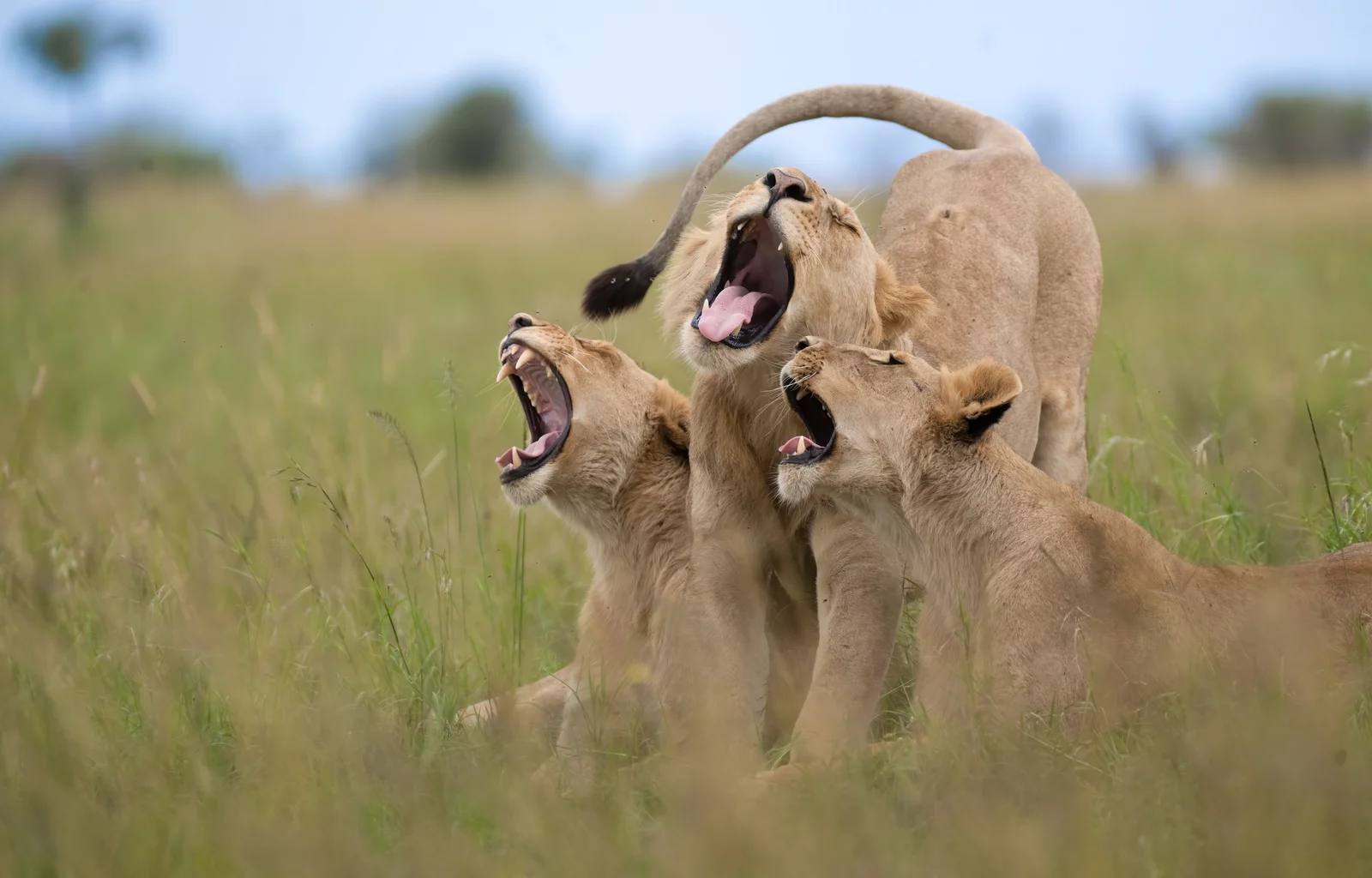
Meline Ellwanger (USA) with their picture “The choir”
“A hilariously lucky moment I caught of these these three lions yawning at the same time.”
“A hilariously lucky moment I caught of these these three lions yawning at the same time.”
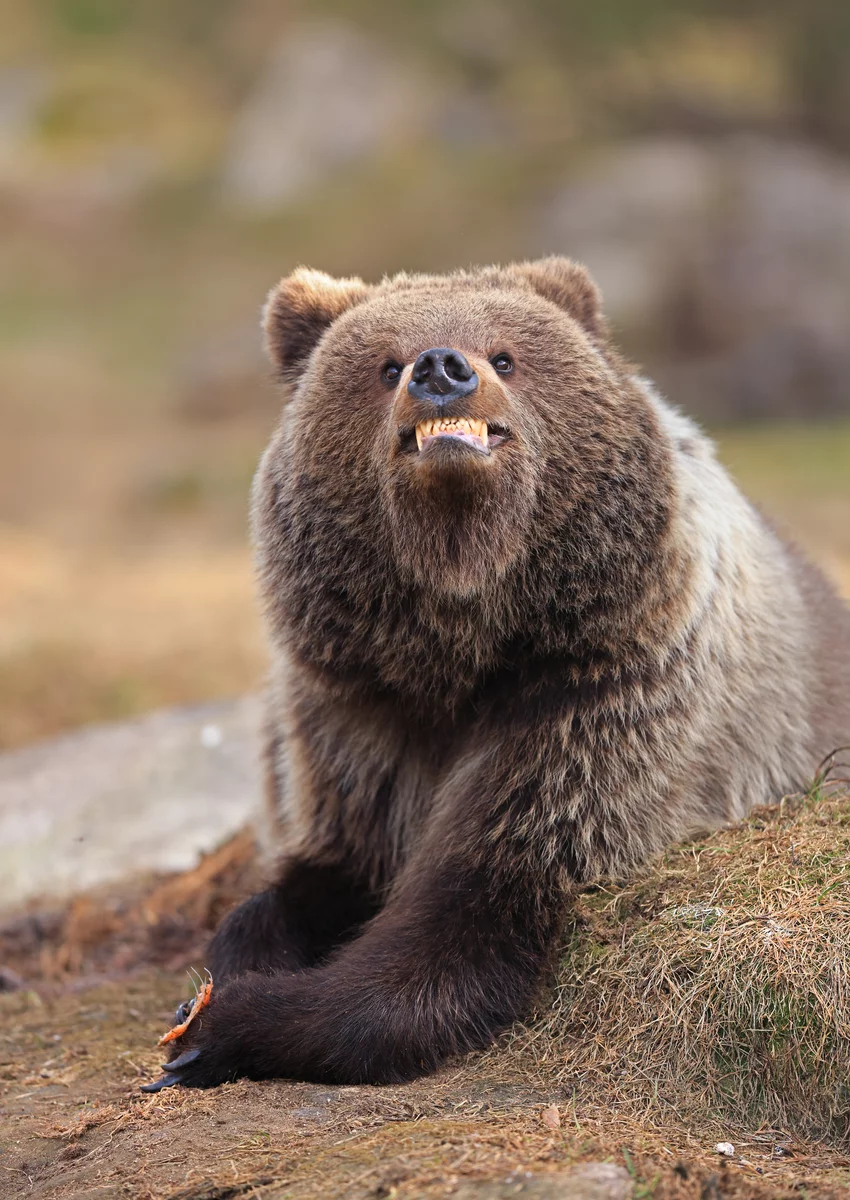
Valtteri Mulkahainen (Finland) with their picture “Smile - you're being photographed ”
“When I was photographing bears, this one year old bear cub saw it and started smiling at me. Apparently he had already had to pose in front of photographers.”
“When I was photographing bears, this one year old bear cub saw it and started smiling at me. Apparently he had already had to pose in front of photographers.”